PEEMO AGENTIC DESIGN
AI-POWERED MEAL ORGANIZER
Company
Academic Project
Date
2025
Tech Stack
Project Overview
PEEMO is an intelligent, AI-powered agentic cooking assistant designed to transform how people plan and prepare meals using autonomous reasoning, LLMs, and real-world data integration.
The Idea & Overview
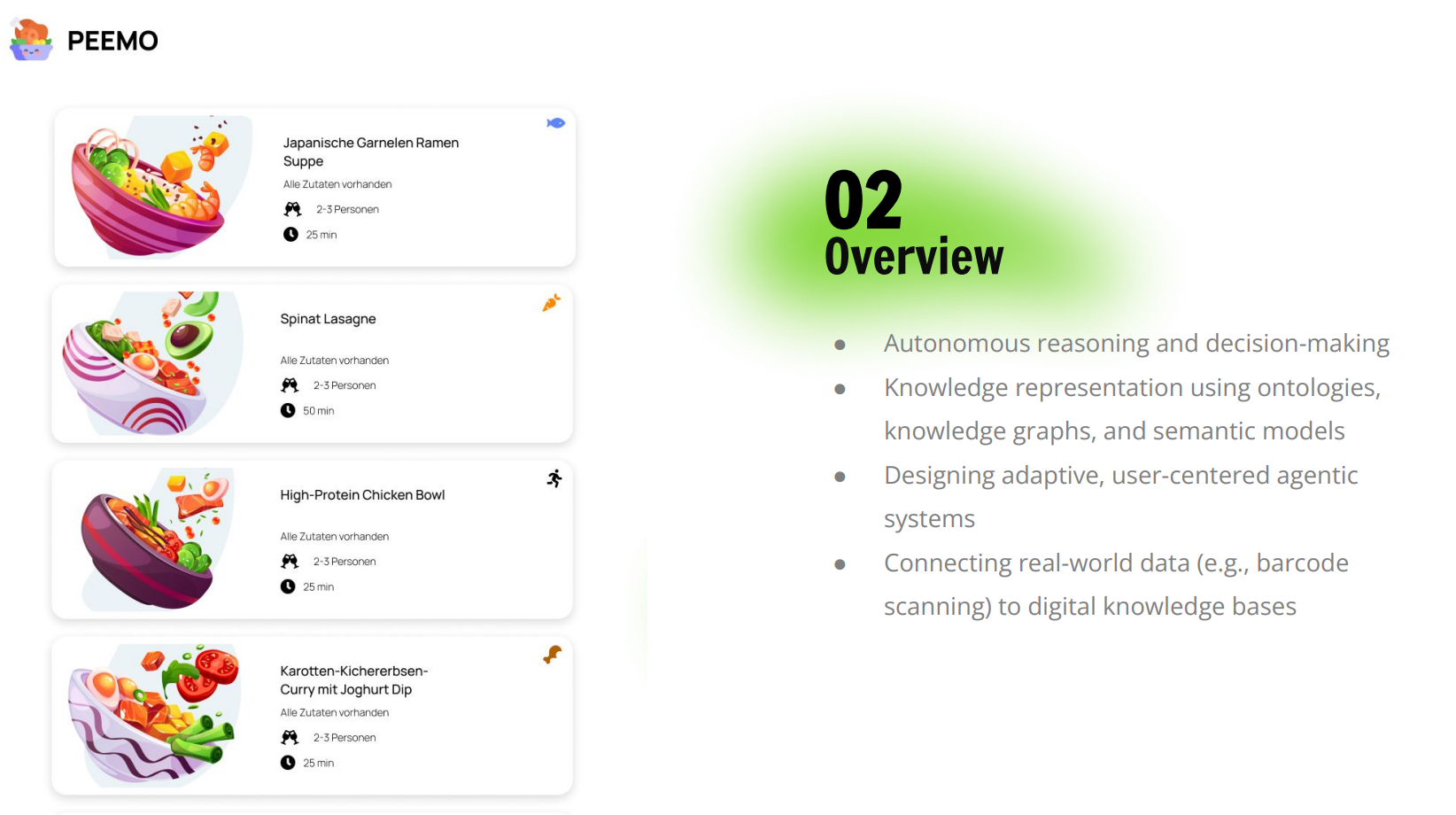
PEEMO (Personalized Eating & Efficiency Meal Organizer) is an intelligent cooking assistant designed to transform meal planning. It utilizes an autonomous agentic system powered by GPT-4 to handle recipe generation and weekly scheduling. By connecting real-world data, such as hardware-assisted barcode scanning, to digital knowledge bases, PEEMO provides users with tailored culinary suggestions based on their actual inventory and dietary preferences.
Core Features
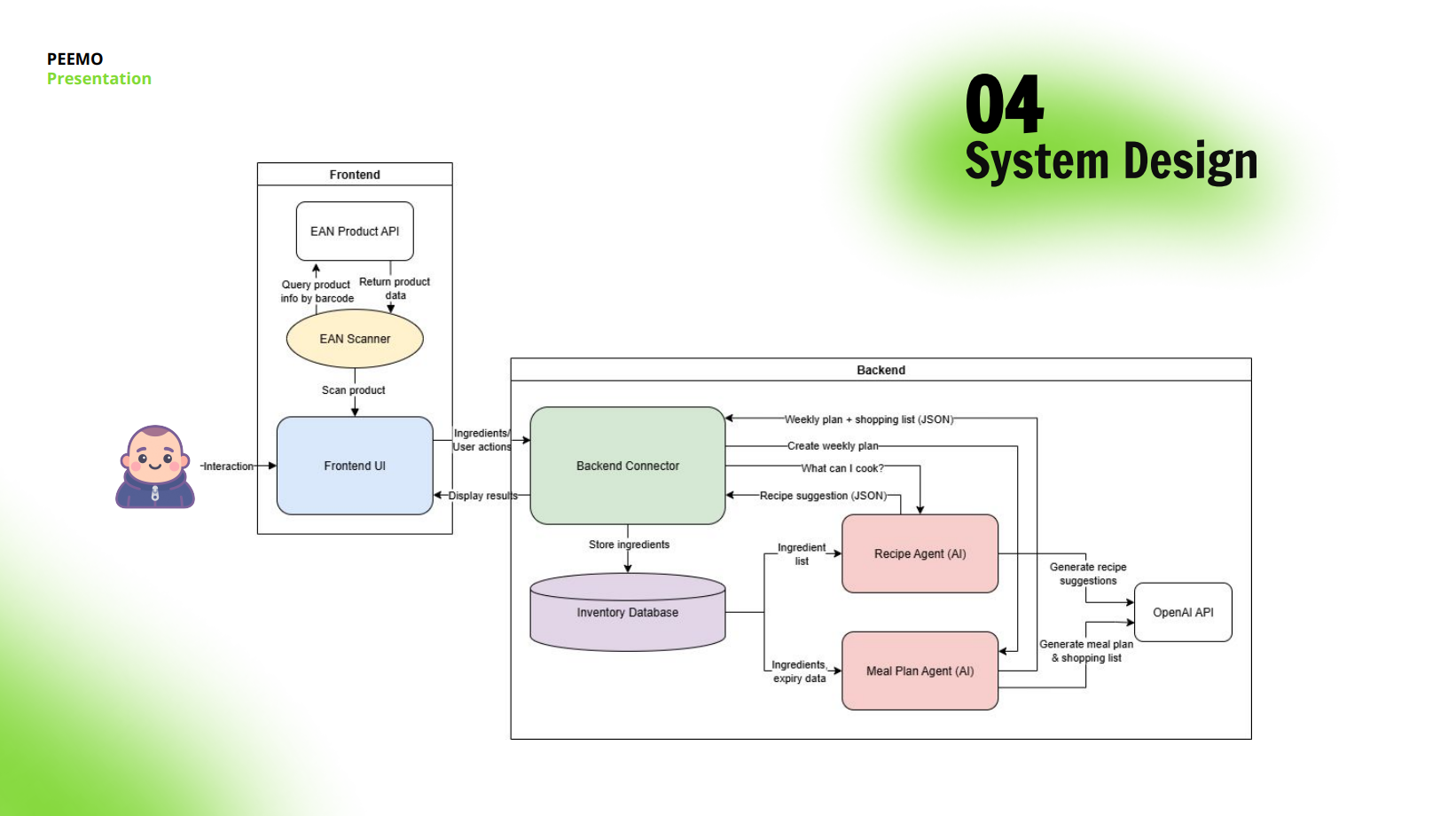
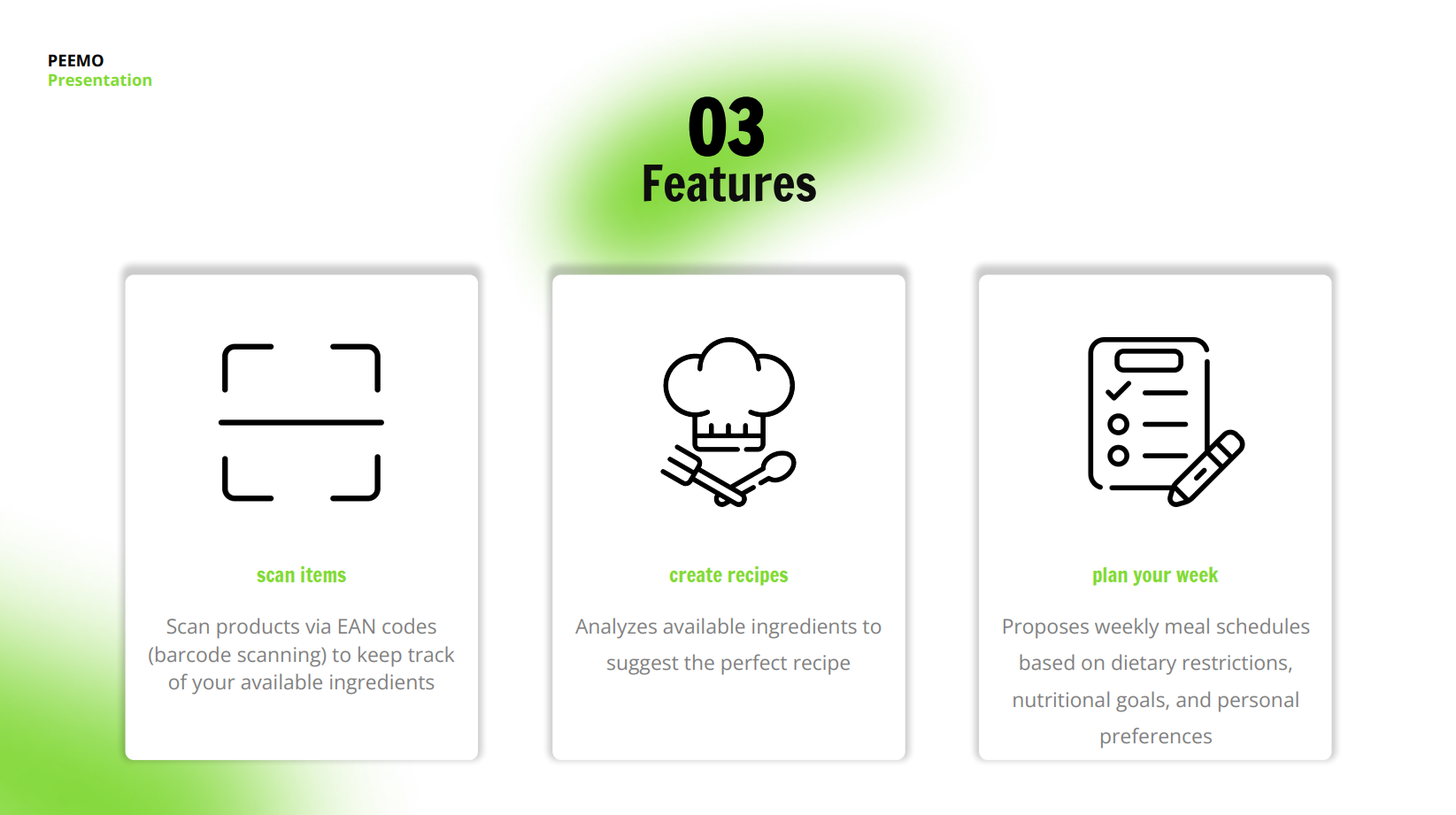
- Scan Items: Users can scan products via EAN codes using a Bluetooth scanner. The system queries the OpenFoodFacts API to fetch product metadata and instantly updates the inventory database.
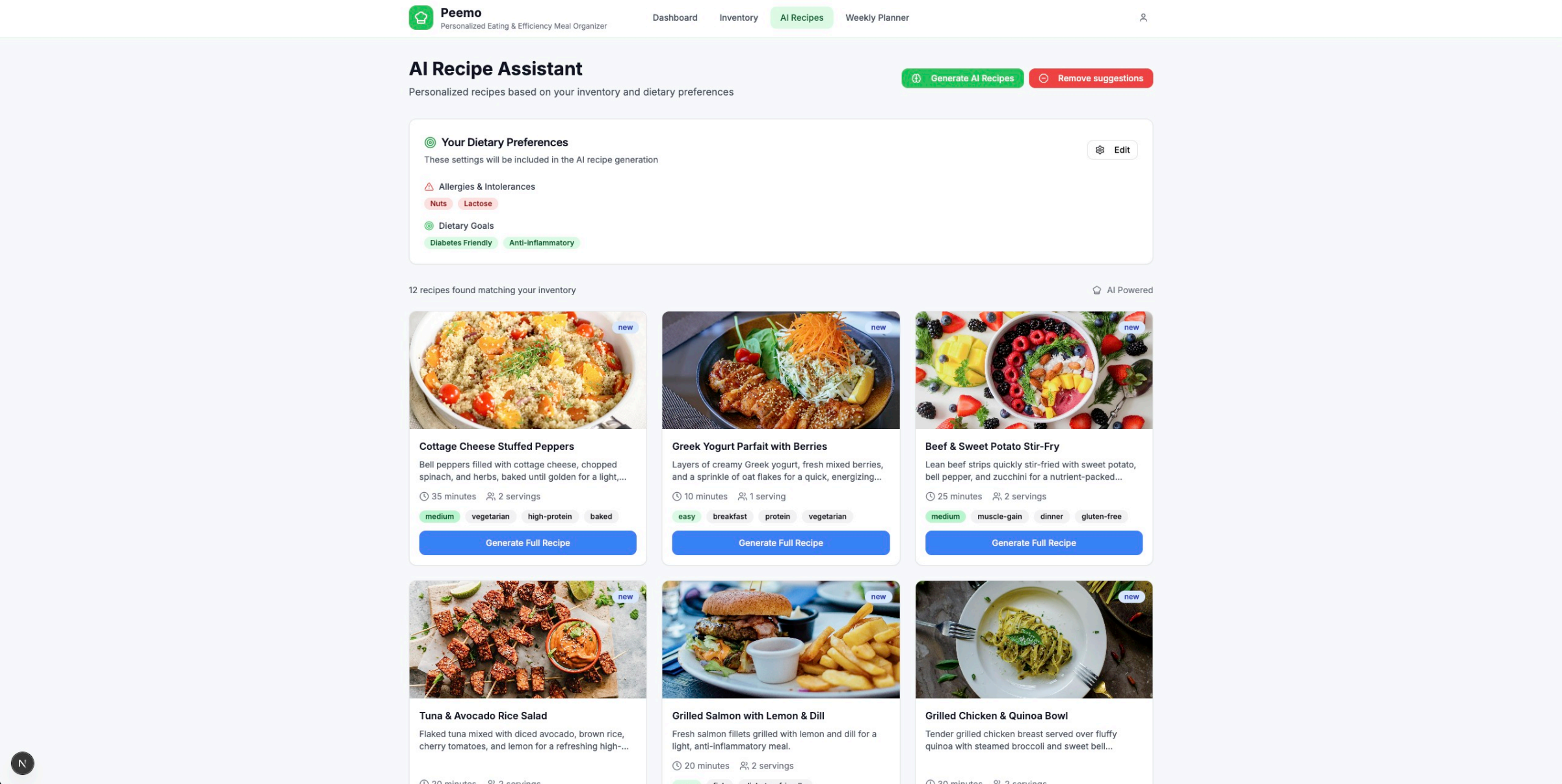
- Create Recipes (Recipe Agent): An autonomous AI agent infers meal options from the available inventory and user preferences, ensuring recipes strictly follow dietary constraints (e.g., low-carb, vegan) while minimizing the need for additional ingredients.
- Plan Your Week (Meal Plan Agent): A dedicated Planning Agent generates a personalized 7-day meal schedule by analyzing the current inventory, ingredient expiration dates, and nutritional goals.
System Architecture & Implementation
The system follows the core tenets of agentic design: autonomy, modularity, and inter-agent communication. We integrated a user-facing Next.js frontend with a robust backend composed of two intelligent agents orchestrated by a Backend Connector. All internal data transfers use a strictly unified JSON format to ensure modularity.
One of the main challenges was prompt engineering and hallucination control. Initial attempts led to mismatched formats or hallucinated ingredients. We solved this by employing OpenAI's function-calling API with strict JSON schema definitions and fallback logic. We ultimately selected GPT-4 Turbo to balance structured response support with acceptable latencies.